
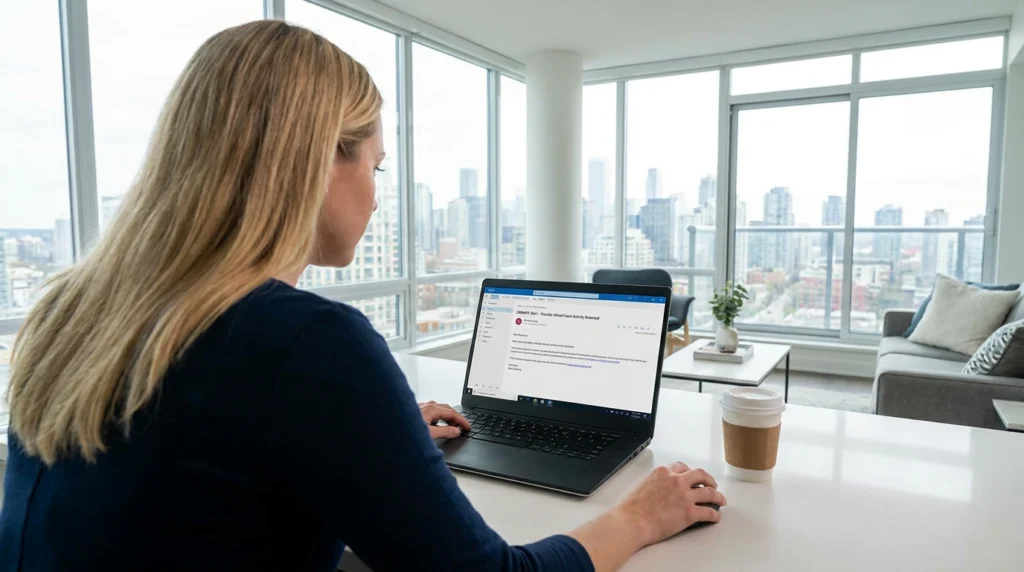
Quick Answer: Real estate wire fraud California agents encounter happens when cybercriminals send fake wiring instructions to redirect closing funds into fraudulent accounts. Once wired, the money is almost impossible to recover. Agents protect clients by verifying wire instructions by phone before every transfer, working with a licensed California title company that uses secure protocols, and educating buyers about the risk early in the transaction.
Real Estate Wire Fraud California: The Threat Every Agent Must Understand in 2026
Real estate wire fraud California agents face has become one of the most dangerous financial threats in the state’s housing market. In 2024, the FBI reported that real estate wire fraud caused an estimated $500 million in losses nationwide. Furthermore, California’s high transaction values make it one of the most targeted states in the country.
According to the California Department of Real Estate (DRE), real estate licensees carry a fiduciary duty that extends to protecting clients from foreseeable harm. Because of this, understanding and preventing wire fraud is not optional for California agents. It is a core professional responsibility.
What Real Estate Wire Fraud California Transactions Face
How the Basic Scheme Works
Real estate wire fraud California buyers face typically follows the same pattern. A criminal hacks into an email account, then monitors the conversation. They wait for the moment when wiring instructions are sent. At that point, they intercept the message or send a convincing fake with a different account number. The buyer wires their down payment to the criminal’s account instead. By the time anyone notices, the money is gone.
Also, buyers often discover the fraud only when they arrive at closing. Recovery is rare. Indeed, the emotional and financial damage is severe.
Why California Closings Are Especially Exposed
Several factors make real estate wire fraud California agents and buyers encounter especially dangerous:
- California’s median home price means many wire transfers exceed $500,000
- Remote work increased email-based communication between agents, escrow officers, and clients
- The speed of competitive California bidding can pressure buyers to act quickly
- Criminals specifically target high-value markets like Southern California, the Bay Area, and the Central Coast
Furthermore, the rise of AI-generated phishing emails has made fake communications harder to detect. Criminals now write messages that perfectly mimic legitimate escrow officers. They sometimes use an actual agent’s signature block copied from a previous email. Consequently, buyers who rely on appearances alone are in serious danger.
Common Variations of the Scheme
Real estate wire fraud California professionals encounter comes in several forms. Understanding each type helps agents spot it before it causes harm.
Business Email Compromise (BEC): The criminal hacks a legitimate email account and sends fake wire instructions directly from it. This is the most common variation.
Spoofed email: The criminal creates an address that looks nearly identical to the real one. For instance, “escrow@805tittle.com” instead of “escrow@805title.com.” One letter is the only difference.
Fake notary or remote closing fraud: A fraudster poses as the seller, uses a fake ID, and instructs a notary to sign documents on property they do not own.
Payoff demand fraud: Criminals intercept loan payoff requests and replace the lender’s banking information with their own account details.
In our experience working with agents across California, BEC attacks are the most common. However, all four variations are active in the California market.
How Real Estate Wire Fraud California Agents Can Prevent at Every Closing
Step 1: Verify Wiring Instructions by Phone Every Time
The single most effective protection against real estate wire fraud California agents can use costs nothing. Before any wire transfer, call the escrow officer directly. Use a phone number you obtained independently at the start of the transaction, not one listed in any email. Verify the account number and routing number verbally. Then document the call.
However, this step only works if the phone number is verified before fraud occurs. Agents should store escrow officers’ direct numbers early, before any attempt could plant a false contact.
Step 2: Educate Buyers Before Closing
Buyers are the most frequent targets of wire fraud because they control the actual funds. Agents should explain the risk clearly at the start of every transaction. Specifically, tell every buyer these four things:
- Wiring instructions never change by email alone
- Any change to banking details requires a phone call to verify
- The escrow company will never send unsolicited last-minute updates
- Be especially suspicious of emails arriving on Fridays or before holidays
Fraudsters deliberately time attacks before weekends. A 72-hour delay in recovery gives them time to move funds offshore. Also, buyers who understand the risk pause and call instead of acting on suspicious instructions immediately.
Step 3: Secure Email and Watch for Spoofing
Agents should enable two-factor authentication on all email accounts. Additionally, avoid sending sensitive transaction details over unencrypted email when possible. Use secure transaction management platforms instead.
Moreover, agents should coach their clients to inspect every email address carefully. A one-letter difference or a “.co” instead of “.com” is often the only warning sign. Because criminals use these tiny differences to deceive even careful readers, this habit is essential.
Step 4: Choose a Title Partner With Strong Security Protocols
Not all title companies take the same approach to fraud prevention. However, a licensed California title company that uses verified, encrypted wire instructions significantly reduces client exposure. The ALTA Best Practices framework specifically addresses wire fraud prevention. Ask your title partner whether they follow ALTA Best Practices as a standard due diligence question.
At 805 Title, we confirm wire instructions through secure, verified channels. We also train our team to flag any last-minute instruction changes as a potential fraud indicator. Working with a trusted title partner is, therefore, one of the most important layers of protection any agent can provide.
How Title Insurance Connects to Real Estate Wire Fraud California Victims Face
What Title Insurance Covers and What It Does Not
This distinction is critical. Standard owner’s title insurance protects against defects in the chain of title. It covers forged deeds, undisclosed liens, and ownership disputes. However, it does not cover wire fraud losses where a buyer is tricked into sending money to a fraudulent account. Wire fraud is a cybercrime, not a title defect.
Also, a lender’s title insurance policy protects the lender’s interest in the property. It does not protect transferred funds either. Consequently, buyers must understand that title insurance and fraud protection serve different purposes.
Deed Fraud and What Title Insurance Does Cover
Deed fraud is a different and equally serious threat. Specifically, it happens when a criminal forges documents to transfer property ownership without the real owner’s knowledge. For example, a fraudster may use a stolen identity to record a fake deed, then take out a loan against the property or attempt to sell it.
Owner’s title insurance protects directly against this scenario. If a fraudulent deed is recorded against a property you own, your title insurance policy covers clearing the title and defending your ownership in court. Indeed, this is one of the clearest examples of why the owner’s policy is worth carrying even when it is not legally required.
In our experience working with homeowners across California, deed fraud cases have increased as remote online notarization became more common. Specifically, forged identity schemes are more sophisticated today than they were just three years ago. Title insurance remains the strongest financial backstop available to property owners.
California Property Fraud Alert Programs
Several California counties now offer free fraud alert services. These services notify property owners when a document is recorded against their property. Los Angeles County, Ventura County, and many others in our service area participate in these programs. Additionally, agents should recommend them to every client at closing as a simple, free, ongoing layer of protection.
Understanding what title insurance does not cover also helps agents set accurate expectations. Wire fraud requires separate cybercrime remedies. Deed fraud and forged document claims, however, fall squarely within what title insurance covers.
Frequently Asked Questions About Real Estate Wire Fraud California
What is real estate wire fraud California buyers should understand?
Real estate wire fraud California buyers face happens when criminals send fake wiring instructions during a transaction. The buyer wires closing funds to a fraudulent account instead of the legitimate escrow account. Buyers should always verify wiring instructions by phone using a number already on file, never one provided in an email.
Does title insurance cover wire fraud losses in California?
No. Standard owner’s title insurance does not cover wire fraud losses. Wire fraud is a cybercrime, not a title defect. Buyers who suffer wire fraud losses should contact their bank immediately and file a report with the FBI’s Internet Crime Complaint Center at ic3.gov.
What is deed fraud and how is it different from wire fraud?
Deed fraud happens when a criminal forges documents to transfer property ownership without the real owner’s knowledge. Wire fraud involves stealing funds during a transaction by intercepting wiring instructions. Deed fraud is covered by owner’s title insurance. Wire fraud is a cybercrime that requires separate legal remedies.
How can California real estate agents protect clients from wire fraud?
Agents should verify wiring instructions by phone at every closing, educate buyers about the risk early, enable two-factor authentication on all email accounts, and work with a California-licensed title company that follows ALTA Best Practices. Also, recommending free county property fraud alert programs adds ongoing post-closing protection.
Are wire fraud attacks more common in California than other states?
California is one of the most targeted states because of high transaction values. Agents in Los Angeles, San Diego, Ventura County, Santa Barbara, and the Bay Area should therefore treat wire fraud prevention as a standard part of every transaction workflow. A single fraudulent transfer in a California closing can involve hundreds of thousands of dollars.
What should a buyer do immediately if they wired funds to a fraudster?
Contact your bank immediately and request a wire recall. Then file a report at ic3.gov. Also contact your real estate agent, escrow officer, and title company right away. Speed is essential. The faster you act, the better the chance of stopping the transfer before funds are moved again.
Work With a California-Licensed Title and Escrow Company
At 805 Title, we are a California-licensed title and escrow company serving buyers, sellers, and real estate agents across the entire state of California. Protecting our clients from fraud is part of how we operate every transaction, from the first title search through final recording. Also, it is a reflection of the standard of care every California agent deserves from their title partner.
In 2026, real estate wire fraud California agents encounter is more sophisticated than ever. However, the core prevention steps remain consistent: verify everything by phone, slow down when something feels off, and work with a title partner who takes security seriously.
Our services for real estate agents include proactive communication, secure transaction protocols, and a team available to answer questions before closing day becomes a crisis. Whether you are closing in Ventura County, Los Angeles, Santa Barbara, San Diego, or anywhere across California, we are here to support you.
Learn more about how title insurance works in California, review the preliminary title report process, or open an order with our team today.
Protect your clients at every closing. Let’s connect at 805title.com/order.